|
||
|
||
 Toltec Class Planetary Assault Ship
 Potemkin Class Frigate
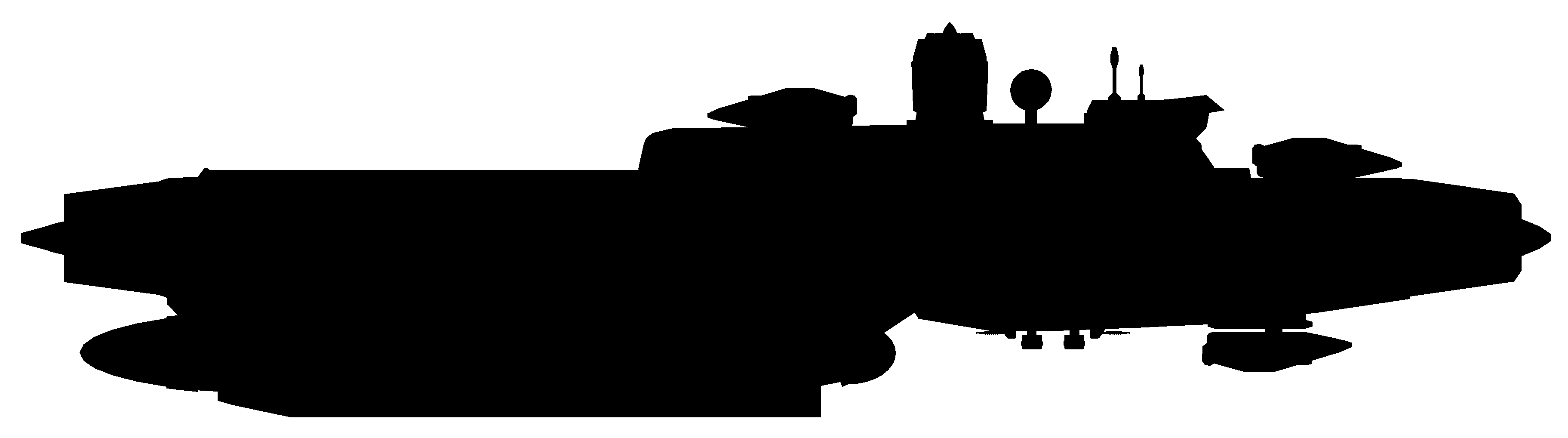 Tacoma Class Heavy Destroyer
 Alamo Class Heavy Cruiser
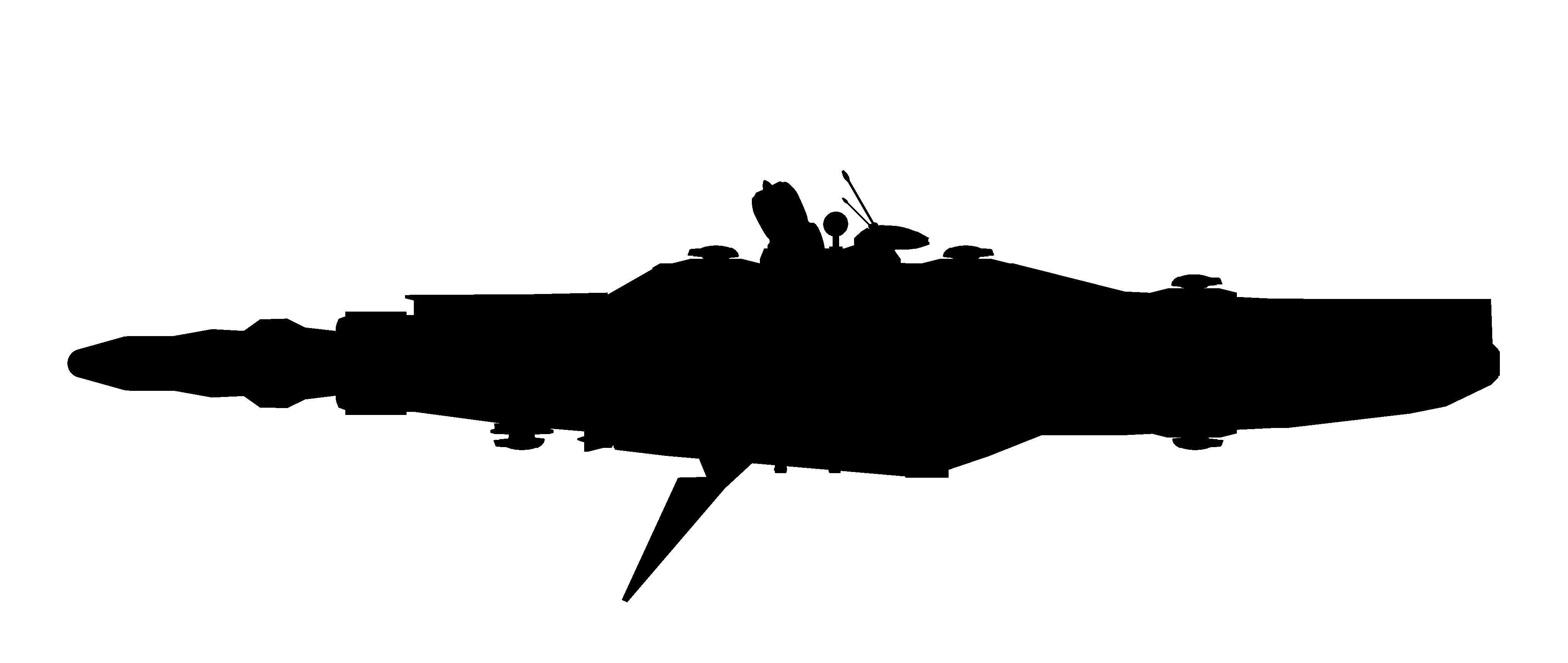 Argonaut Class Light Cruiser
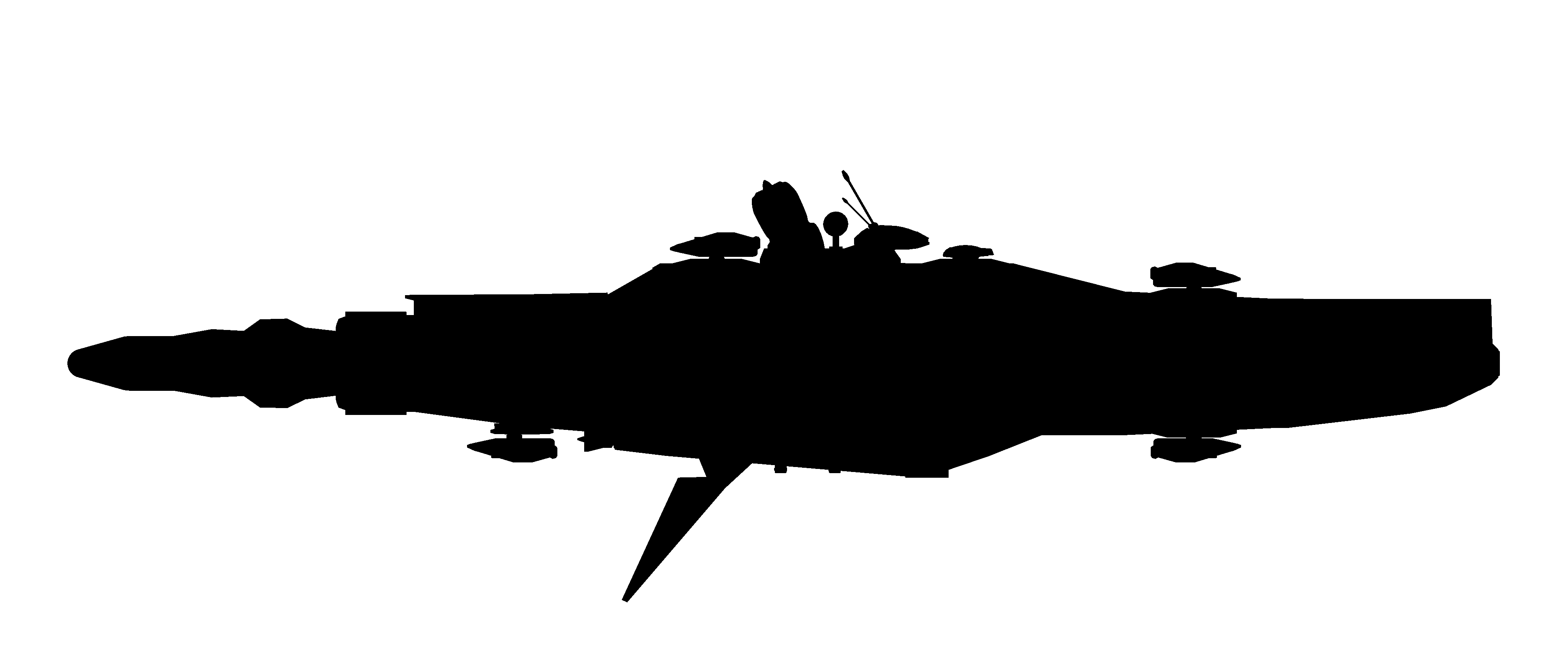 Olympus Class Heavy Cruiser
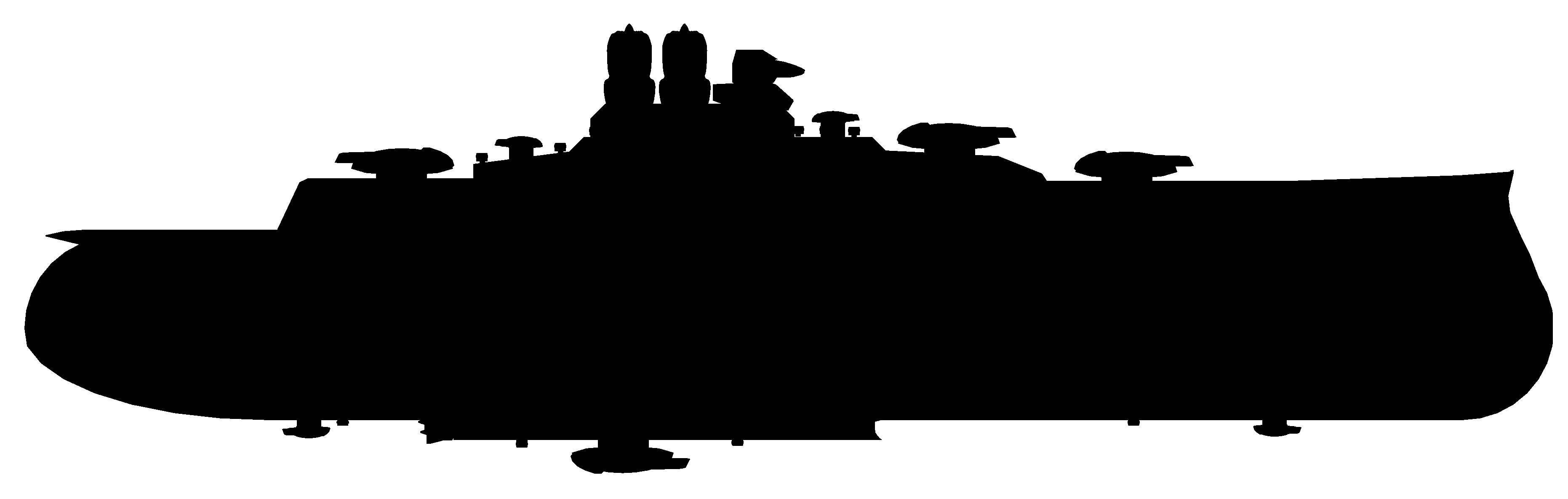 Klasa Rodetsky Class Battlecruiser
 Kyoto Class Main Space Battleship
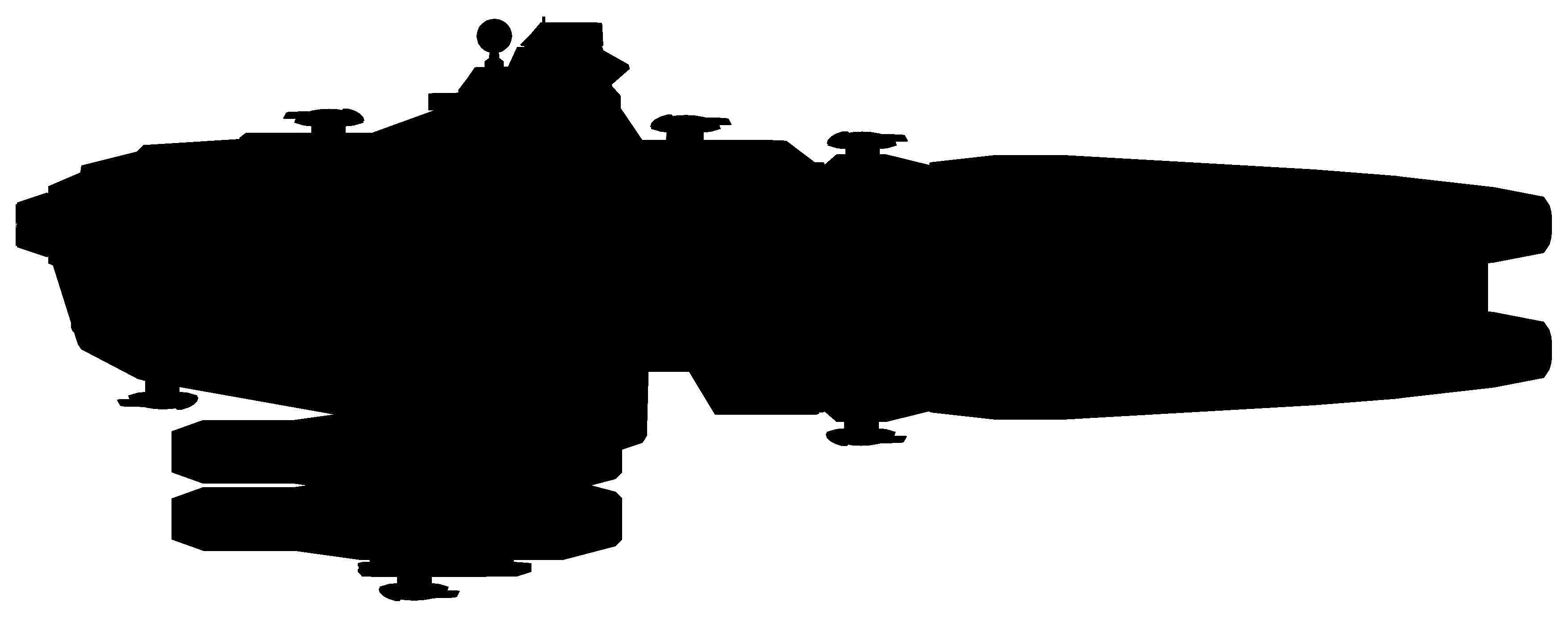 George Washington Class Dreadnought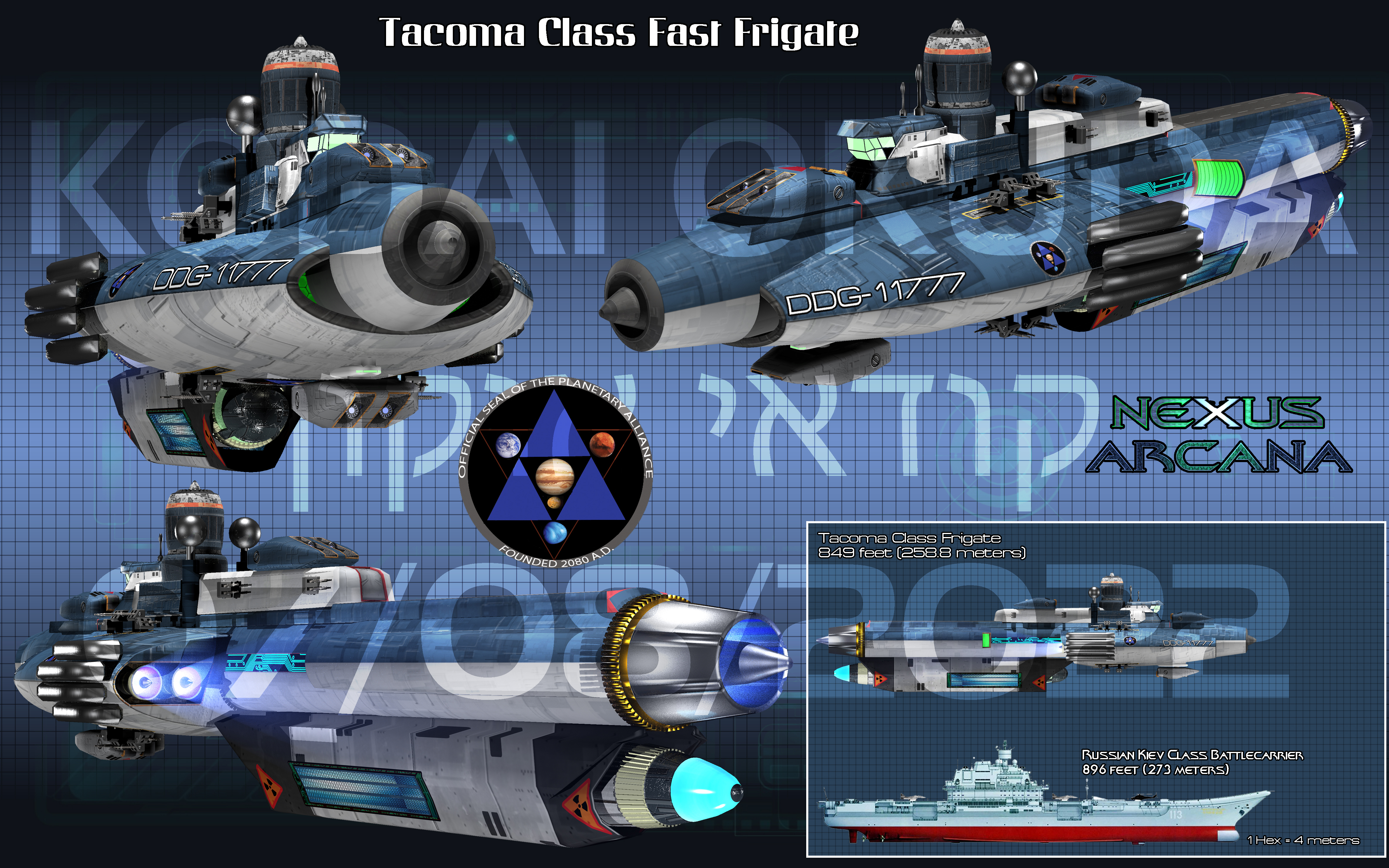
SPECIFICATIONS
GOVERNMENT: Planetary Alliance
TYPE: Fast Frigate
MODELS: Tacoma Class
DATE INTRODUCED: 2190 AD
LENGTH: 847 feet (258.8 meters)
WIDTH: 268 feet (81.7 meters)
HEIGHT: 231.3 feet (70.5 meters)
MATERIAL: Composite-Alloy
POWER PLANT: x22 Macrotech IPFF-5000 Ion Plamsa Fusion Furnace
OUTPUT: 5 Gigawatts each (110,000 megawatts/110 Gigawatts total)
ARMOR TYPE: Composite-Alloy
ARMOR THICKNESS: 1.5 inches
DISPLACEMENT: 50,000 tons
CREW: 351 plus up to 40 flight, for 391 total. (50 Operators, 68 Gunners, 34 Officers, 50 Engineers, 50 Technicians, 50 Electricians, 19 Medical, 10 Science, 20 Security, and 40 pilots)
PROPULSION:
PRIMARY (Intra-Solar Engines):
1x Lunar Dynamics EMD-17.5K Electromagnetic Drive
SPEED: KiloMACH 20 (15,200,000 mph)
SECONDARY (Interplanetary Engines)
4x Lunar Dynamics LDFT-900
SPEED: 3990 miles per hour each (15,960 mph total)
FASTER THAN LIGHT DRIVE:
1x Prodotech SWD-47.5K, 2nd Generation, Mark-III, Stellar Warp Drive
SPEED: 0.333 light years per hour
WEAPONS:
PRIMARY (OFFENSIVE):
3x Nippon Military Industries NMI-IB-2000 dual 1000-megawatt Ion Blaster cannon turrets; Effective Range: 10,000 miles; Payload: unlimited nuclear battery clutch; ROF: 1 dual blast every ten seconds with a cyclic rate of 6 dual blasts per minute.
PRIMARY (ASSAULT/BALLISTIC):
8x Terratech ASTF-10K cruise missile launcher; Missile Type: ASM-10K 10,000-pound computer-guided medium-range cruise missile with 47.8-megaton yield; Effective Range: 1161.1 miles; Payload: 1 space torpedo each torpedo launcher; ROF: 1 torpedoes per two seconds.
PRIMARY (DEFENSIVE):
20x Jupiter Arms JA-RFLC-100 dual 50-megawatt laser cannon turrets; Effective Range: 300 miles; Payload: unlimited with nuclear battery clutch, holds 800-megawatts for rapid fire; ROF: up to 8 dual-blasts per 2 seconds, with a cyclic rate of 240 dual blasts per minute.
ELECTRONICS:
1x Laser Communications array with a 1000 AU range.
1x Microwave Communications array with a 1000 AU range.
1x SLV communications suite 1 light-year.
1x LADAR sensor suite with a 220,000 year range.
1x Passive EMS sensor array with a range of 1,000,000 miles.
1x Active EMS sensor array with a range of 100,000 miles.
1x SLV sensor suite with a 1-parsec range.
1x Gravitational Control/Antigravity unit Effect: provides artificial lift,g-force compensation and enhanced maneuverability.
DEFENSE SYSTEMS:
(Kinetic)
6x Warptron DFG-400 400-megawatt LEVEL-03 Gravitonic deflector field generators; RANGE: 400 feet; OUTPUT: 101 terajoules with a regeneration rate of 10.1 terajoules per ten seconds.
(ENERGY)
1x Nippon Military Industries NMI-IFD-2K Ion-Field Dampener generator; Range 100 feet each, OUTPUT: Absorbs/Dissipates up to 4000 terajoules (4,000,000 gigajoules) of energy. NOTE: Projectile weapons (like autocannons, etc.) and missiles are not effected by the field.
HANGAR BAYS:
(Main Hangar)
1x 6000-yd3; Bay holds up to Forty MBR-01C1 plus up to 2000 yd3 of ordinance, parts, spare robots and weapon pods.
SPECIAL SYSTEMS:
66x Escape Pods; Range: 18,240 miles; Effect: Each escape pod holds six individuals, can fly at a speed of Mach 1 for up to 24 hours, has a food supply to provide six persons with one month of food
Description/Overview:
While the Potempkin class was deemed adequate by the Planetary Alliance Space Navy acquision board, the random failure of the Stellar Warp Drive system due to the Electromagnetic Drive sharing an engine housing with it was too much of a risk. Therefore, a nearly identical, albeit larger, frigate class was developed to replace the Potempkin. This new class was the Tacoma. The Tacoma class saw an increase in displacement and size which hurt the time-dilation of the spacecraft a bit, but not enough to be a hindrance. It was classified as a fast frigate due to the velocity of its sublight EMD drive which was double that of the Potempkin. This velocity was considered necessary for the missions that the Tacoma was expected to perform based on the data from the Outer Sphere War.
The main weapons of the Tacoma were Ion Blasters rather than MESON cannons. This was due to the fact that the rate of fire of Ion Blasters, and their range, was far greater than the MESON guns.
Nexus Arcana, The Stygian Conspiracy, The Grand Duke's Ambition, The Goddess of Galandria and all related works are trademarks owned and licensed by Yesod Publications. Copyright 1995, all rights reserved.