|
||
|
||

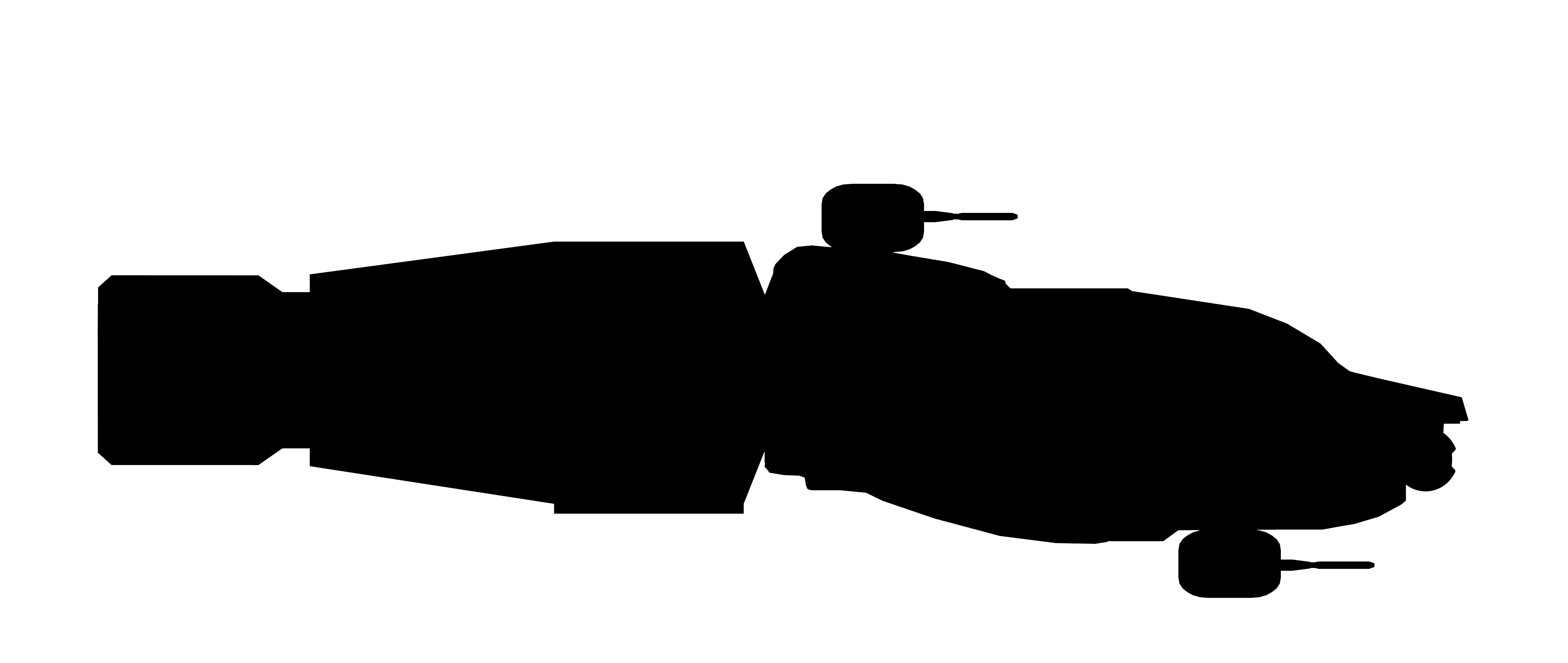
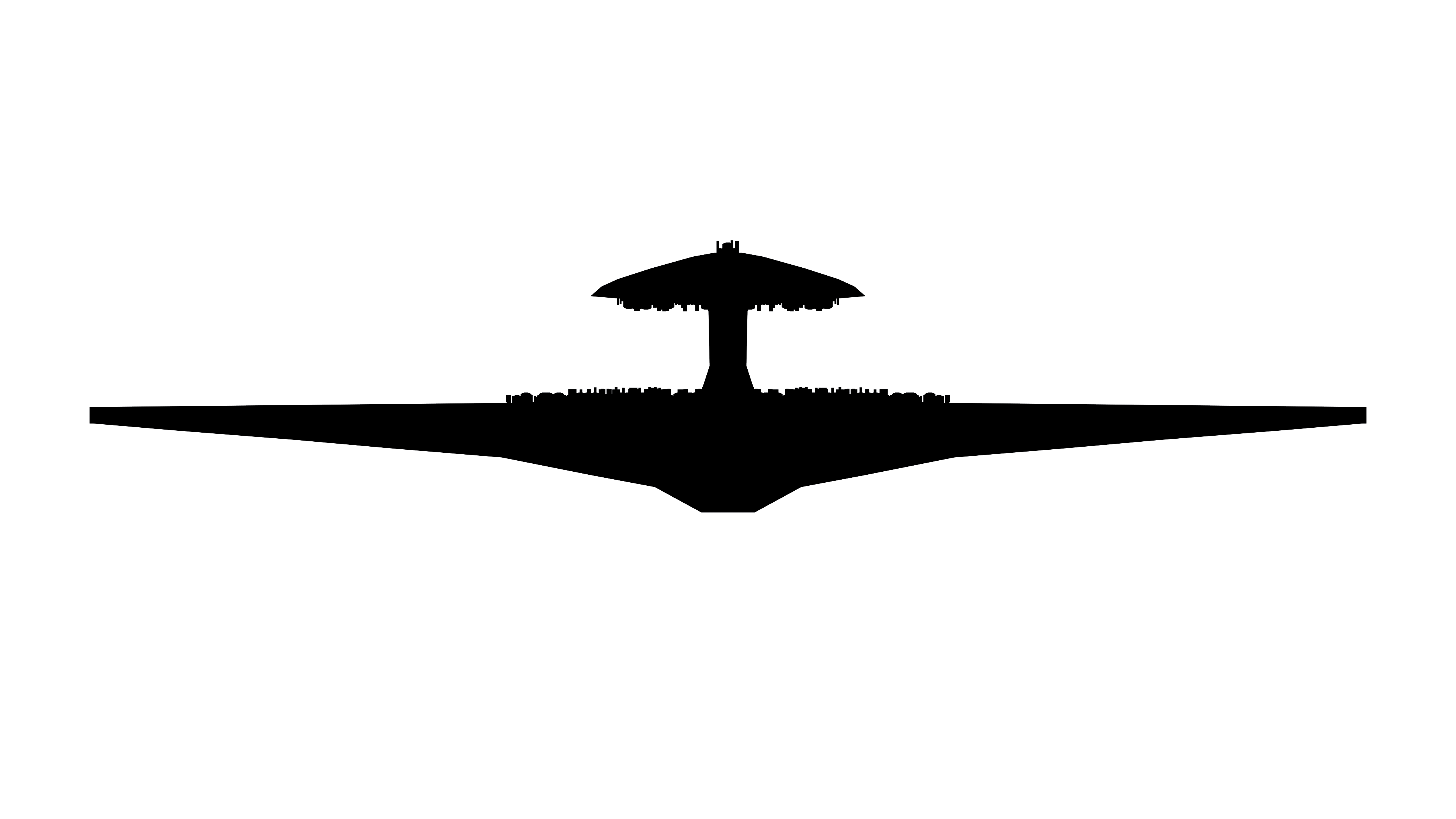
In 2192, a survey team in the Ross 47 star system found a massive heretofore unknown Prodono Mobile Command base from the Imperial era of the Prodono. The base itself was intact, but there was no sign of the crew or the colonists that had manned and lived on the enormous base. What was discovered was that the war between the Varna and the Prodono was far more than just about ideology, or territory, or power, it centered around the collection, and quarantine of the various Solahdeen Zaphner-radiation artifacts all over the galaxy. The data recovered from the Goro Duragal indicated that all of these relics had been gathered from around the galaxy and stored in various locations within the Sol star system. The Earth itself was off limits to all landings, and exploration. Only the Earth's moon--Luna--was used to monitor and observe how the planet evolved after being exposed to Zaphner radiation hundreds of thousands of years after the titanic battle that ended the Holy Star Byrd Empire and caused the Solahdeen to fracture into warring states.
When the Goro Duragal was discovered in 2192, mankind already knew a great deal about the 1st Prodono Republic. With the introduction of the Prodono Android forces of the old Prodono Alliance, even more relevant data was uncovered revealing that the alien race had been a space faring society exploring the galaxy prior to 300,000 BC. The late Doctor Xiang of the United Nations Space Corps had deciphered all of the available data during the UN Solar Empire’s Alpha Centauri research project of the 2160s, but with the colonization of the Sol system, and many other star systems nearby, a new wealth of data on the Prodono Republic--and the previous governemental body of the Prodono Federation--was slowly deciphered and catalogued. This new information bolstered concerns that factions of the Prodono Republic or worse yet, the mysterious Prodono Empire, might still exist in the galaxy. The discovery of the Prodono Androids and their Central Control computer AI only added to this concern. Most governments of mankind were convinced that the flesh and blood Prodono no longer existed, but their androids, AIs and other computer mechanisms were a very real--and after the Outer Sphere War of the late 2180s--proven threat.
It had become widely known that this alien race was a warlike and expansionistic power whose influence spanned most of the galaxy, 40% according to Dr. Xiang’s notes at the time of the Prodono Republic. This hegemony, according to Xiang’s findings, was due to the Prodono Republic consisting of the most powerful 24 of the 135 stellar powers that survived the Unification Wars that took place after the collapse of the Prodono Federation. What the political, economic, and military makeup of these powers was is open to anyone’s speculation. Xiang was of the opinion that the Unification Wars were a kind of galaxy-wide conflict that had caused a mass extinction of many races and cultures throughout the galaxy sometime before 300,000 BC, and thus the Prodono were one of the fortunate races to have endured this calamity. Later evidence contradicted Xiang's belief when the remains of other alien races in the service of the Prodono were found in many of their ruins, and starship wrecks. These aliens were given the designation as "servitor races" as they were likely second-class citizens within the Republic after they had been conquered. The Prodono did not engage in mass Genocide of other alien races as Xiang had speculated and in fact all races conquered were made into what Xiang had labeled "servitor races". A practice that most likely bolstered the ranks of the Prodono military considerably.
The basic physical makeup of the Prodono was outwardly similar to humans, though they were taller (6.5-7.5 feet tall), had bronze-colored skin, different hair colors (silver, pink, orange, blue, and green were common), and different eye colors (violet, emerald, sapphire, ruby, and yellow were common). The medical information that they found on the alien battlefactory at Alpha Centauri suggested that the aliens were genetically different. Their outward similarity was due to the ancient Soladin (pronounced Sol-Ah-Dean) race meddling with the physical appearance of untold numbers of races across the galaxy when they
ruled over 90% of it sometime between 500,000 and 440,000 BC. The Soladin may have remade mankind in their image as well, but Xiang did not delve into this idea during his research. What became of the Soladin is unknown. The medical records of the Prodono battlefactory gave only a general reason as to why the Prodono looked similar to other races which may or may not be genetically different from them. Dr. Xiang didn’t translate the sections of the medical archives of the other alien species which he considered of lesser importance, details about these races were delved into more deeply by other researchers decades later when more complete data was uncovered about many of them.
The Prodono military must have been vast indeed to be able to maintain a foothold on 40% of the Milky Way. Xiang's speculations that the Prodono armed forces recycled older craft, and used them alongside newer ships as they produced them in order to meet what must have been incredible military obligations and logistical demands were confirmed when older Prodono Federation and newer Prodono Empire craft and mecha were discovered. Nearly all of the designs used by the Prodono Republic were of older Federation designs, and ALL of the Empire craft and mecha were of both Federation and Republic types. The fleet structure of the Prodono forces appears to have been very complex with small groups of 100-500 ships being used for exploration and domestic affairs, while fleets in excess of 100,000 craft were used during military conquests and wartime operations. The sheer volume of men and material needed for such a nation was mind-numbing to Xiang as he related in his notes. Battlefactories were constructed for the various Prodono fleets to meet some of these needs. These enormous spacestations ranged in size from asteroid-sized to small moons depending on the fleet it was intended to support. Xiang speculated that the battlefactory was a staple of galactic warfare leftover from some bygone eon, and that thousands of factories might have one time existed across the galaxy. The purpose of these spacestations was not only the production of warships, mecha, and the repair of these craft, but they also acted as the living quarters and colony worlds of the Prodono.
The society of the Prodono Republic centered on the idea of being a truly spacefaring race. Dr. Xiang surmised that the vast majority of the Prodono people lived in the mobile battlefactories or similar constructs throughout the area of space that they controlled. Habitable planets for the Prodono seemed to have been used solely for food production. Xiang postulated that as mankind spreads out into the galaxy, it may have to do the same in order to ensure the survival of the species. The genetic makeup of the Prodono was such that their bodies regenerated over time after they had reached full growth, thus making them
essentially immortal. This influenced their societal structure greatly and resulted in a timekeeping method unlike that of mankind.
Xiang determined that the Prodono timekeeping scale was identical to the one used by the Soladin 200,000 years before them. He learned that this scale was based on the time required for light to travel the span of the Milky Way galaxy (approx. 100,000 years Earth Relative) rather than the orbit of any planet around a sun or suns. This calendar’s starting point began with the formation of the Soladin galactic civilization. Therefore, the Prodono Republic began in the year 2 GS (Galactic Spans) of the Soladin calendar. The current year, Xiang concluded at the time he discovered this timekeeping system (2169 AD), was 5.02069 GS of the Soladin calendar.
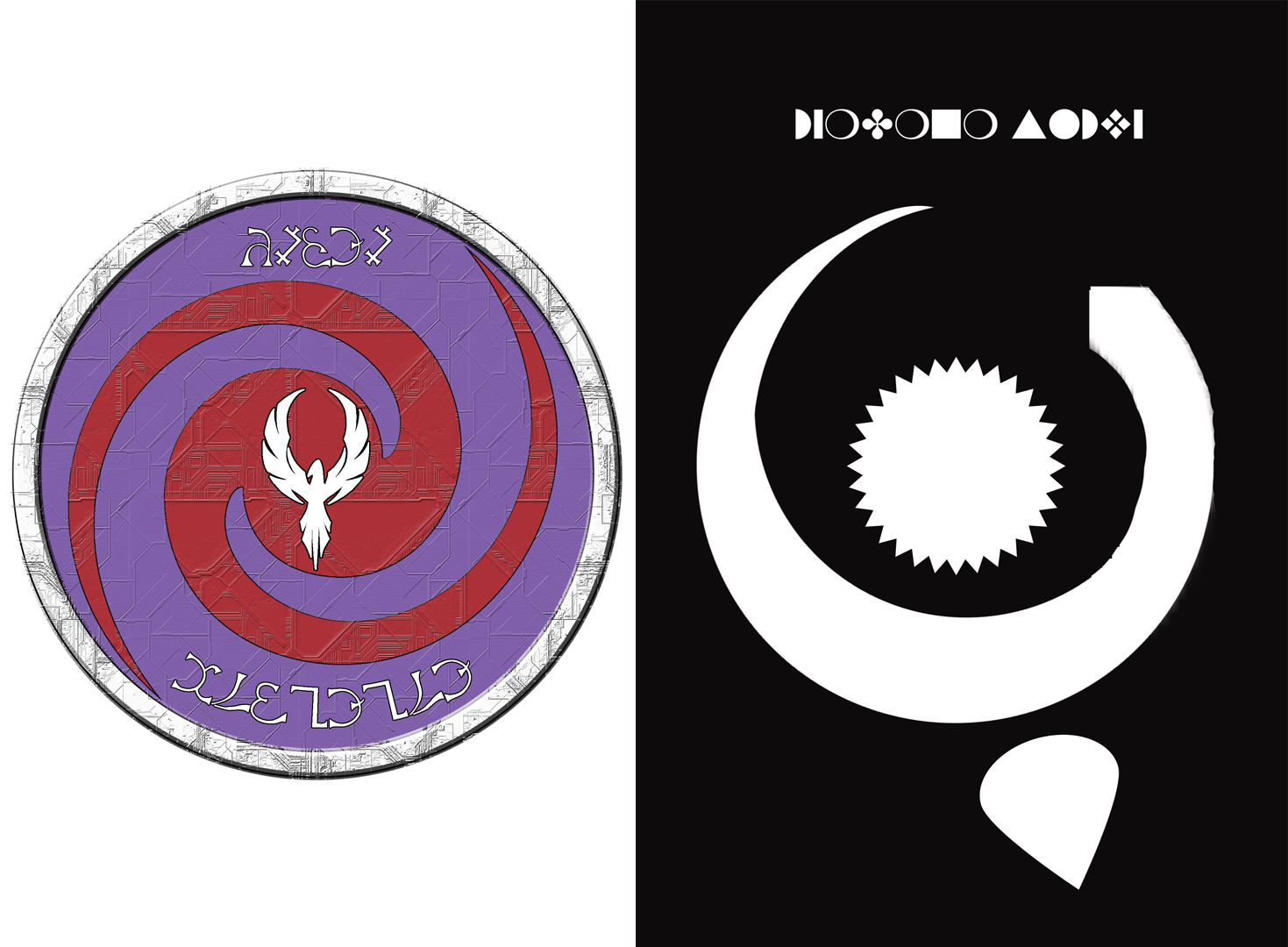
The language of the Prodono was twofold in that there was the native Prodono language, which was hieroglyphic in nature, while the second was a sort of “Prodono Common” made up of basic geometric symbols (very similar to computer dingbats) that were apparently intended for use by the servitor races. The native Prodono was very difficult to understand, and Xiang was unable to penetrate all but the peripheral meanings of some of the symbols. The common language, on the other hand, was quite easy to master, as it was solely based on phonetic pronunciation of words that coincide to Prodono symbols.
The advantages in time saved and ease of learning of such a primitive symbolic language was not lost on Dr. Xiang. He chose to decipher the Prodono Common tongue rather than the hieroglyphic native language for those simple reasons. Xiang was more interested in unraveling the secrets of the alien technology than making a career of studying their language. Therefore, he needed the most expeditious means possible and that was the common tongue of this spacefaring culture.
The technology of the Prodono seems to have been built with ease of use in mind. Although the detailed technical elements of the craft were not impossible to decode, the principles of some of their systems (like the fold drive) were nearly impossible for scientists of the 2160s and 2170s to unravel. This technology did, however, allow the UNSC to improve their intersection drive technology and provided the basis for stellar warp drive development. The Earth power that gained the most benefit from the Prodono technology was the Earth Federal Republic, specifically the Earth Federal Space Marines, and subsequently the Neo-Hebrews of Saturn.

After nearly thirty years of research by the Methuseian xenoarchaeologists of the Neo-Hebrews, a rough, albeit accurate, historical overview of the Varna began to take shape. With the discovery of the Varna temple on the fourth moon of the fifth planet of the Ross 47 star system, an even clearer picture of the Varna emerged. The data was immediately classified as Top Secret by the Orion Theocratic Republic, but much of it was leaked to the Sol Alliance in 2194 from information garnered at Ross 47.
The history of the Varna begins with the fall of the Star Byrd Empire sometime around 400,000 BC (Earth Relative). Their collapse caused chaos to reign throughout the galaxy. Multiple small empires and republics rose and fell during the estimated 40,000 years in between eras. This time was known as the 1st Galactic Dark Age. The galactic rim regions were the first portions of the galaxy to recover. The Solahdeen and Corthobadin were unable to advance back up to their former technological glory as both sides were still warring with each other as balkanized independent fiefdoms.. This constant conflict kept both powers at much lower technological level than the height that had reached at the zenith of their power. This degradation of science, technology, and progress continued forfor all of the 1st Galactic Dark Age. The first power to rise from the ashes of this chaos were the Varna and thus the 2nd Galactic Era was ushered in by them.
The history of the Varna garnered from the various finds in the Local Group of Stars by the Neo-Hebrews of Saturn and the subsequent Orion Theocratic Republic learned that sometime around 400,000 BC, from the burned out ashes of the galactic rim region, in the Alpha Quadrant of the galaxy, rose a new galactic power, the Varna. Built on the technologies of the old Star Byrd Empire, the Varna began their slow conquest of space. The Varna Republic was based on the old Star Byrd Republic. The Varna quickly spread out into the Alpha Quadrant, colonizing and restoring many of the burnt out worlds of the ancient Star Byrd Empire.
As the Varna spread throughout the galaxy, they met the Kamphlarian Consortium sometime around 398,000 BC. The meeting of the two powers was not violent despite the Kamphlarians being of Corthobadin descent, and a treaty was made between them. The Kamphlarians joined the Varna Republic and together they achieved a higher techonology level and greater ability to expand into the Milky Way and nearby dwarf galaxies.
While exploring the Beta Quadrant around 390,000 BC, the Varna encountered a race known as the ZhoKhandei (Zo-Khan-dee) Stellar Republic. The meeting was hostile at first, but an uneasy peace was formed. The Varna Republic reached greater technological heights from this new alliance and further extended their cultural and societal influence across the Milky Way galaxy. Mapping, cataloging and exploring countless star systems as they did so.
In approximately 386,000 BC, the Varna Republic encountered the Cendhonai Star League in the Beta Quadrant. The meeting was hostile and war erupted. The Varna quickly overwhelmed the Cendhonai, and an uneasy peace was established.
By 380,000 BC the Varna Republic spanned nearly half the galaxy (Alpha and Beta quadrants). Their continued expansion brought them in contact with various stellar nations. The Kiron Dae, Kan’jour, Zarn, and Esbellion Stellar Republics were encountered in the Delta quadrant as the Varna explored that region of the Milky Way. These warring states were unified by the Varna and brought into their Republic. This union brought the Varna to a technological higher level than had been seen since before the 1st Galactic Dark Age.
The Varna Republic encountered the Prodono Stellar Republic in the Gamma quadrant around 375,000 BC. Their meeting was hostile at first, but the Varna managed to convince the Prodono to join the Varna Republic for their mutual benefit. Their merger allowed both cultures to achieve a super-science level of technology.
The Varna Republic controlled 90% of the galaxy by 370,000 BC. Their expansion was halted by the remnants of the Solahdeen and Corthobadin who sought to stop another galaxy wide empire from rising. The science and technology of the Varna was reaching the initial level of Zaphner-tech and that greatly concerned both the Solahdeen and Corthobadin stellar nations. Unable to challenge the Varna directly, due to their own decline in technology, the various Solahdeen and Corthobadin stellar powers chose instead to engage in a long espionage campaign to try and guide the Varna away from the Zaphner sciences.
After numerous interstellar wars within sector-nations of the Varna Republic in or around 365,000 BC, the Varna Republic reorganized into the Varna Federation to prevent further conflict. A galactic silver age began that was estimated to have lasted 8000 years.
With the end of the silver age sometime before 357,000 BC, the Varna Federation began to collapse. The Varna central galactic government imposed marshal law to quell the increasing internal violence between the various stellar nation-states of the Varna Federation and the Varna Empire was born. The Empire caused large numbers of the individual stellar nation states, particularly those of the Magellanic clouds and galactic rim stellar nations, to form their own governments and rebel against the Empire. The Varna Empire responded with force and a civil war erupted throughout the galaxy.
After 7000 years of civil war, the Varna Empire crumbled into approximately 70 factions, all of which were fighting for control. The various factions were reduced in technology severely, down to the level the various Terran space powers were at in 2193. So ended the era of the Varna and began the 2nd Galactic Dark Age.
Nexus Arcana, The Stygian Conspiracy, The Grand Duke's Ambition, The Goddess of Galandria and all related works are trademarks owned and licensed by Yesod Publications. Copyright 1995, all rights reserved.